WHEEL BALANCE ACCURACY
PURPOSE
1.
2.

PROCEDURE <BALANCING TIPS>
1.
2.
3.
4.
5.

<CONFIRMING PROPER BALANCE>
1.
2.
<WHEEL BALANCER CALIBRATION CHECKS>
1.
2.
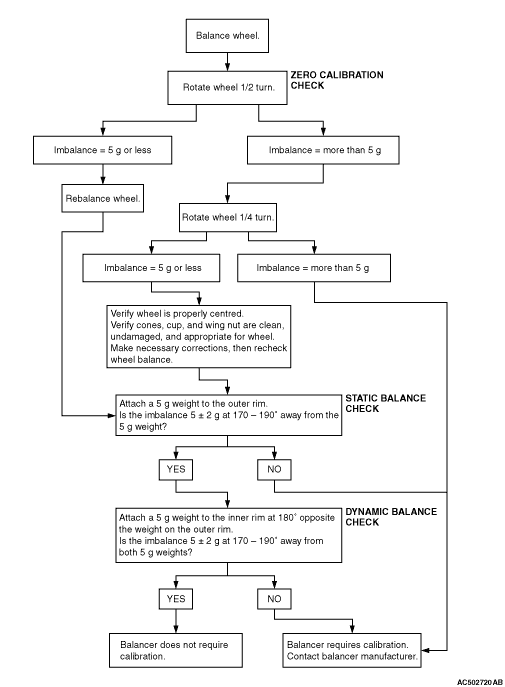
- If the imbalance is 5 g or less, the zero calibration is OK. Rebalance the
wheel, then go to Step 4 to check static balance.
- If the imbalance is more than 5 g, go to Step 3.
- If the imbalance is 5 g or less, the wheel may not be centred on the balancer,
or the balancing cones, the cup, and/or wing nut are damaged, dirty, or inappropriate
for the wheel. You may need to refer to the balancer manufacturer’s instructions to
verify the correct attachments. After making the necessary corrections, recheck the wheel balance.
If OK, then go to Step 4.
- If the imbalance is more than 5 g, the balancer requires calibration. Contact the
balancer manufacturer for calibration by their repair representative.
- If the imbalance is within specification, the static balance calibration
is correct. Go to Step 5 to check the dynamic balance.
- If the imbalance is out of specification, the balancer requires calibration. Contact
the balancer manufacturer for calibration by their repair representative.
- If the imbalance is within specification, the dynamic balance calibration
is correct. The balancer calibration checks are complete.
- If the imbalance is out of specification, the balancer requires calibration. Contact
the balancer manufacturer for calibration by their repair representative.
WHEEL BALANCER CALIBRATION CHECKING FLOW CHART