|
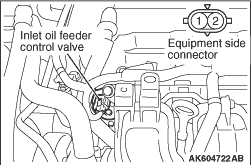
1.Disconnect the inlet oil feeder control valve connector.
| caution |
To prevent the coil from burning, keep the duration of the voltage
application as short as possible.
|
2.Make sure that the inlet oil feeder control valve generates a tick sound when the
battery voltage is applied between the connector terminals at the inlet oil feeder control valve
side.
|
|
|
1.Disconnect the inlet oil feeder control valve connector.
|
|
|
2.Measure the resistance between the terminals of the connector at the inlet oil feeder
control valve.
|
|
|
Standard value: 6.9 - 7.9 Ω (at 20°C)
|
|
|
3.If the resistance deviates from the standard value, replace inlet oil feeder control
valve.
|
|
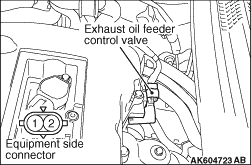
1.Disconnect the exhaust oil feeder control valve connector.
| caution |
To prevent the coil from burning, keep the duration of the voltage
application as short as possible.
|
2.Make sure that the exhaust oil control valve generates a tick sound when the battery
voltage is applied between the connector terminals at the exhaust oil feeder control valve side.
|
|
|
1.Disconnect the exhaust oil feeder control valve connector.
|
|
|
2.Measure the resistance between the terminals of the connector at the exhaust oil feeder
control valve.
|
|
|
Standard value: 6.9 - 7.9 Ω (at 20°C)
|
|
|
3.If the resistance deviates from the standard value, replace the exhaust oil feeder
control valve.
|