|
|
1.Raise the front wheels using a jack, and support with a rigid rack.
|
|
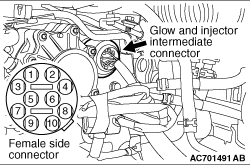
2.Disconnect the glow and injector intermediate connector.
3.
| caution |
- Keep the fluid level at MIN or higher than
that during the bleeding operation.
- Since the air is atomised into the power steering fluid if the bleeding is performed
with the engine running, be sure to bleed the system while cranking the engine.
|
While cranking the engine intermittently with the starter motor several times (within
15 to 20 seconds), turn the steering wheel fully in both directions five or six times.
4.Connect the ignition coil connector, start the engine, and let it idle.
5.Turn the steering wheel fully in both directions until no bubbles can be seen in the
oil reservoir.
6.Make sure that the fluid is no longer milky and that the fluid level is between MAX
and MIN marks.
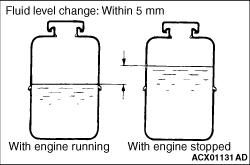
7.Make sure that the power steering fluid level in the reservoir does not change significantly
when the steering wheel is turned to the left or right side.
|
|
8.
| caution |
- If the fluid level goes up rapidly after
the engine has been stopped, the power steering system is not bled sufficiently.
- If the bleeding operation is not performed completely, the fluttering or abnormal
noise may be produced from the pump and/or flow control valve, causing the durability
performance of the pump to be reduced.
|
Check the fluid level variation between two engine conditions (engine starting and engine
stopped).
9.When the fluid level variation is 5 mm or more, the power steering system is not bled
sufficiently. In this case, bleed the system again.
|
|
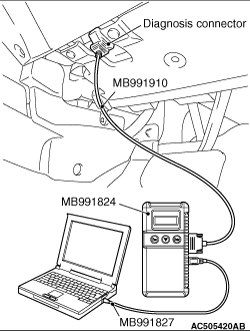
10.Use M.U.T-III to check if the diagnosis code is set. If the diagnosis code is set, erase
it.
|
|
|
1.Raise the front wheels using a jack, and support with a rigid rack.
|
|
2.Disconnect the glow and injector intermediate connector.
3.
| caution |
- Keep the fluid level at MIN or higher than
that during the bleeding operation.
- Since the air is atomised into the power steering fluid if the bleeding is performed
with the engine running, be sure to bleed the system while cranking the engine.
|
While cranking the engine intermittently with the starter motor several times (within
15 to 20 seconds), turn the steering wheel fully in both directions five or six times.
4.Connect the ignition coil connector, start the engine, and let it idle.
5.Turn the steering wheel fully in both directions until no bubbles can be seen in the
oil reservoir.
6.Make sure that the fluid is no longer milky and that the fluid level is between MAX
and MIN marks.
7.Make sure that the power steering fluid level in the reservoir does not change significantly
when the steering wheel is turned to the left or right side.
|
|
8.
| caution |
- If the fluid level goes up rapidly after
the engine has been stopped, the power steering system is not bled sufficiently.
- If the bleeding operation is not performed completely, the fluttering or abnormal
noise may be produced from the pump and/or flow control valve, causing the durability
performance of the pump to be reduced.
|
Check the fluid level variation between two engine conditions (engine starting and engine
stopped).
9.When the fluid level variation is 5 mm or more, the power steering system is not bled
sufficiently. In this case, bleed the system again.
|
|
10.Use M.U.T-III to check if the diagnosis code is set. If the diagnosis code is set, erase
it.
|
|
|
1.Raise the front wheels using a jack, and support with a rigid rack.
|
|
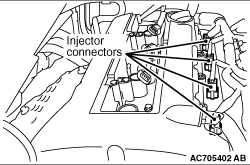
2.Disconnect the all of the injector connectors.
3.
| caution |
- Keep the fluid level at MIN or higher than
that during the bleeding operation.
- Since the air is atomised into the power steering fluid if the bleeding is performed
with the engine running, be sure to bleed the system while cranking the engine.
|
While cranking the engine intermittently with the starter motor several times (within
15 to 20 seconds), turn the steering wheel fully in both directions five or six times.
4.Connect the ignition coil connector, start the engine, and let it idle.
5.Turn the steering wheel fully in both directions until no bubbles can be seen in the
oil reservoir.
6.Make sure that the fluid is no longer milky and that the fluid level is between MAX
and MIN marks.
7.Make sure that the power steering fluid level in the reservoir does not change significantly
when the steering wheel is turned to the left or right side.
|
|
8.
| caution |
- If the fluid level goes up rapidly after
the engine has been stopped, the power steering system is not bled sufficiently.
- If the bleeding operation is not performed completely, the fluttering or abnormal
noise may be produced from the pump and/or flow control valve, causing the durability
performance of the pump to be reduced.
|
Check the fluid level variation between two engine conditions (engine starting and engine
stopped).
9.When the fluid level variation is 5 mm or more, the power steering system is not bled
sufficiently. In this case, bleed the system again.
|
|
10.Use M.U.T-III to check if the diagnosis code is set. If the diagnosis code is set, erase
it.
|
|
|
1.Raise the front wheels using a jack, and support with a rigid rack.
|
|
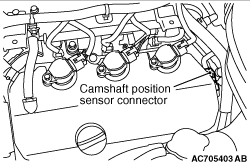
2.Disconnect the camshaft position sensor connector.
3.
| caution |
- Keep the fluid level at MIN or higher than
that during the bleeding operation.
- Since the air is atomised into the power steering fluid if the bleeding is performed
with the engine running, be sure to bleed the system while cranking the engine.
|
While cranking the engine intermittently with the starter motor several times (within
15 to 20 seconds), turn the steering wheel fully in both directions five or six times.
4.Connect the ignition coil connector, start the engine, and let it idle.
5.Turn the steering wheel fully in both directions until no bubbles can be seen in the
oil reservoir.
6.Make sure that the fluid is no longer milky and that the fluid level is between MAX
and MIN marks.
7.Make sure that the power steering fluid level in the reservoir does not change significantly
when the steering wheel is turned to the left or right side.
|
|
8.
| caution |
- If the fluid level goes up rapidly after
the engine has been stopped, the power steering system is not bled sufficiently.
- If the bleeding operation is not performed completely, the fluttering or abnormal
noise may be produced from the pump and/or flow control valve, causing the durability
performance of the pump to be reduced.
|
Check the fluid level variation between two engine conditions (engine starting and engine
stopped).
9.When the fluid level variation is 5 mm or more, the power steering system is not bled
sufficiently. In this case, bleed the system again.
|
|
10.Use M.U.T-III to check if the diagnosis code is set. If the diagnosis code is set, erase
it.
|