Code No.11: Wheel
Speed Sensor (FR) Open or Short Circuit
Code No.12: Wheel Speed Sensor (FL) Open or
Short Circuit
Code No.13: Wheel Speed Sensor (RR) Open or Short Circuit
Code
No.14: Wheel Speed Sensor (RL) Open or Short Circuit
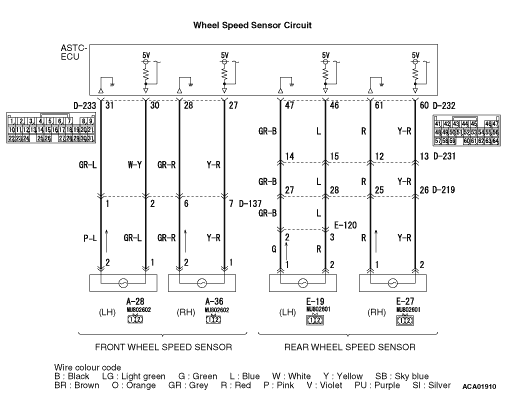
<LHD>
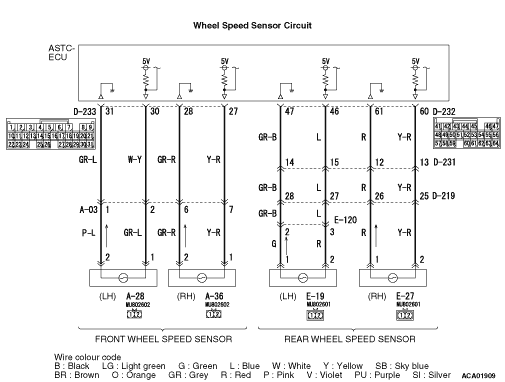
<RHD>
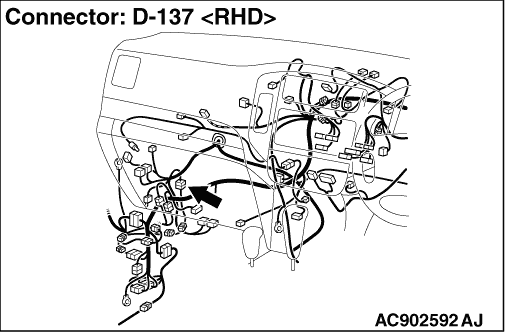
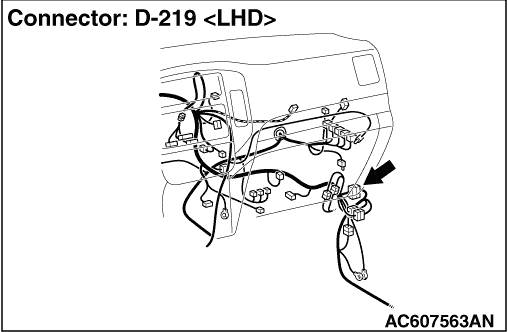
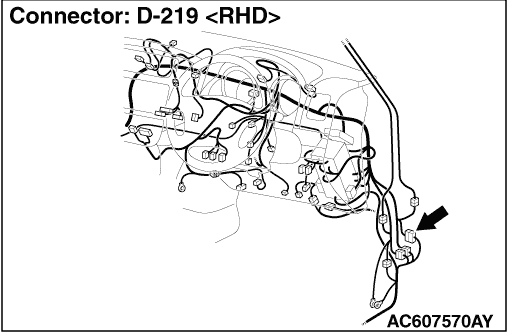
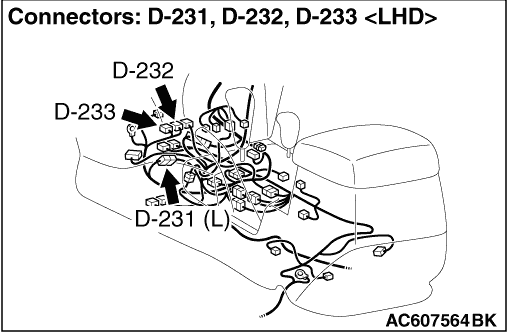
|
|
| caution |
If there is any problem in
the CAN bus lines, an incorrect diagnosis code may be stored. Diagnose the CAN bus lines before
the diagnosis codes (Refer to GROUP 54D, CAN bus-line diagnostic flow  ). ).
|
|
|
|
- A toothed rotor generates a voltage signal as it moves across the pickup
field of each wheel speed sensor.
- The amount of voltage generated at each wheel is determined by the clearance between
the rotor teeth and the wheel speed sensor, and by the speed of rotation.
- The wheel speed sensors transmit the frequency of the voltage signal to the Active
stability and traction control system-electronic control unit (ASTC-ECU).
- The ABS hydraulic unit modulates the amount of braking force individually applied
to each wheel cylinder.
|
|
|
DIAGNOSIS CODE SET CONDITIONS
|
|
|
Diagnosis codes No.11, 12, 13 and 14 are stored when sensor impedance is varies due to breakage
of the wiring harness, connectors or coil of the four wheel speed sensors.
|
|
|
The most likely causes for these diagnosis codes to set are:
|
|
|
- Malfunction of the wheel speed sensor
- Damaged wiring harness or connector
- Malfunction of the ASTC-ECU
|
|
|
STEP 1. M.U.T.-III CAN bus diagnostics
|
|
|
| caution |
Before connecting or disconnecting the M.U.T.-III, turn the ignition
switch to the "LOCK" (OFF) position.
|
|
|
|
(1)Connect M.U.T.-III to the 16-pin diagnosis connector.
|
|
|
(2)Turn the ignition switch to the "ON" position.
|
|
|
(3)Diagnose the CAN bus line.
|
|
|
(4)Turn the ignition switch to the "LOCK" (OFF) position.
|
|
|
Q.
Is the check result normal?
|
|
|
 Go to Step 3. Go to Step 3.
|
|
|
|
|
|
 Repair the CAN bus line (Refer to GROUP 54D, CAN bus line Diagnostic flow ).
Then go to Step 2. Repair the CAN bus line (Refer to GROUP 54D, CAN bus line Diagnostic flow ).
Then go to Step 2.
|
|
|
|
|
|
STEP 2. Check whether the diagnosis code is stored again.
|
|
|
| caution |
Before connecting or disconnecting the M.U.T.-III, turn the ignition
switch to the "LOCK" (OFF) position.
|
|
|
|
(1)Turn the ignition switch to the "ON" position.
|
|
|
(2)Erase the diagnosis code.
|
|
|
(3)Turn the ignition switch to the "LOCK" (OFF) position.
|
|
|
(4)Turn the ignition switch to the "ON" position.
|
|
|
(5)Check if the diagnosis code is stored.
|
|
|
(6)Turn the ignition switch to the "LOCK" (OFF) position.
|
|
|
Q.
Is code No.11, 12, 13 or 14 stored?
|
|
|
Go to Step 3.
|
|
|
|
|
|
The procedure is complete.
|
|
|
|
|
|
STEP 3. M.U.T.-III data list
|
|
|
(1)
| caution |
Before connecting or disconnecting the M.U.T.-III,
turn the ignition switch to the "LOCK" (OFF) position.
|
Connect M.U.T.-III to the 16-pin diagnosis connector.
|
|
|
(3)Set M.U.T.-III to the data reading mode, and check the data list items by driving
the vehicle.
- Item 1 (Code No.11 is stored): Front right wheel speed sensor
- Item 2 (Code No.12 is stored): Front left wheel speed sensor
- Item 3 (Code No.13 is stored): Rear right wheel speed sensor
- Item 4 (Code No.14 is stored): Rear left wheel speed sensor
|
|
|
(4)Turn the ignition switch to the "LOCK" (OFF) position.
|
|
|
Q.
Does the speedometer indication match the M.U.T.-III indication?
|
|
|
It can be assumed that this malfunction is intermittent. Refer to GROUP 00, How
to Use Troubleshooting/Inspection Service Points -
How to Cope with Intermittent
Malfunction .
|
|
|
|
|
|
Go to Step 4.
|
|
|
|
|
|
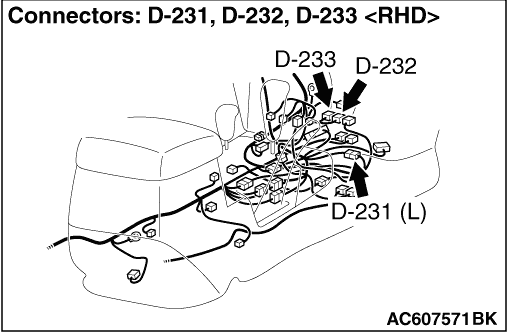
STEP 4. Resistance measurement at D-232, D-233 ASTC-ECU connector.
|
|
|
(1)Disconnect the D-232, D-233 ASTC-ECU connector.
|
|
|
(2)Measure the resistance between the ASTC-ECU connector terminals.
- Code No.11 is stored: Between the D-233 ASTC-ECU connector terminal 27 and 28
- Code No.12 is stored: Between the D-233 ASTC-ECU connector terminal 30 and 31
- Code No.13 is stored: Between the D-232 ASTC-ECU connector terminal 60 and 61
- Code No.14 is stored: Between the D-232 ASTC-ECU connector terminal 46 and 47
Standard Value: 1.0 -
1.5 kΩ
|
|
|
Q.
Is the check result normal?
|
|
|
Go to Step 5.
|
|
|
|
|
|
NO (When resistance between the D-233 ASTC-ECU connector terminals 27 and 28 is not
within the standard value.)  : Go to Step 6. : Go to Step 6.
|
|
|
|
|
|
NO (When resistance between the D-233 ASTC-ECU connector terminals 30 and 31 is not
within the standard value.) : Go to Step 7.
|
|
|
|
|
|
NO <When resistance between the D-232 ASTC-ECU connector terminals 60 and 61 is
not within the standard value.> : Go to Step 8.
|
|
|
|
|
|
NO <When resistance between the D-232 ASTC-ECU connector terminals 46 and 47 is
not within the standard value.> : Go to Step 9.
|
|
|
|
|
|
STEP 5. Voltage measurement at D-232, D-233 ASTC-ECU connector.
|
|
|
(1)Disconnect the D-232, D-233 ASTC-ECU connector.
|
|
|
(2)Measure the voltage between the ASTC-ECU connector terminals.
- Code No.11 is stored: Between the D-233 ASTC-ECU connector terminal 27 and 28
- Code No.12 is stored: Between the D-233 ASTC-ECU connector terminal 30 and 31
- Code No.13 is stored: Between the D-232 ASTC-ECU connector terminal 60 and 61
- Code No.14 is stored: Between the D-232 ASTC-ECU connector terminal 46 and 47
OK: 1 V or less
|
|
|
Q.
Is the check result normal?
|
|
|
Go to Step 15.
|
|
|
|
|
|
NO (When voltage between the D-233 ASTC-ECU connector terminals 27 and 28 is not within
the standard value.) : Go to Step 6.
|
|
|
|
|
|
NO (When voltage between the D-233 ASTC-ECU connector terminals 30 and 31 is not within
the standard value.) : Go to Step 7.
|
|
|
|
|
|
NO <When voltage between the D-232 ASTC-ECU connector terminals 60 and 61 is not
within the standard value.> : Go to Step 8.
|
|
|
|
|
|
NO <When voltage between the D-232 ASTC-ECU connector terminals 46 and 47 is not
within the standard value.> : Go to Step 9.
|
|
|
|
|
|
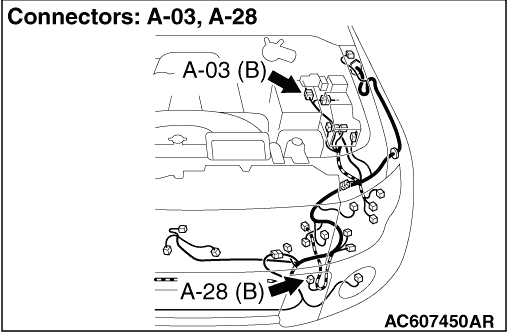
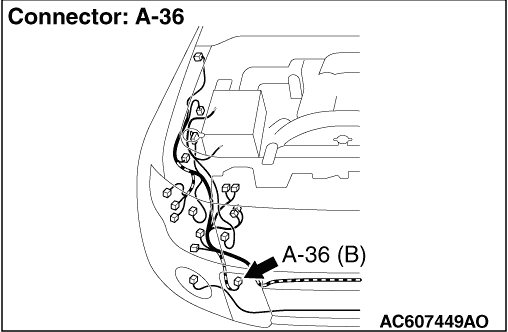
STEP 6. Check D-233 ASTC-ECU connector, A-03 intermediate connector <LHD>
or D-137 intermediate connector <RHD> and A-36 wheel speed sensor front: RH connector for
loose, corroded or damaged terminals, or terminals pushed back in the connector.
|
|
|
Q.
Is the check result normal?
|
|
|
Go to Step 10.
|
|
|
|
|
|
Repair or replace the damaged component(s). Then go to Step 15.
|
|
|
|
|
|
STEP 7. Check D-233 ASTC-ECU connector, A-03 intermediate connector <LHD>
or D-137 intermediate connector <RHD> and A-28 wheel speed sensor front: LH connector for
loose, corroded or damaged terminals, or terminals pushed back in the connector.
|
|
|
Q.
Is the check result normal?
|
|
|
Go to Step 10.
|
|
|
|
|
|
Repair or replace the damaged component(s). Then go to Step 15.
|
|
|
|
|
|
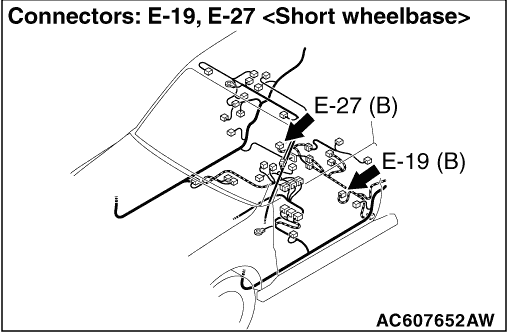
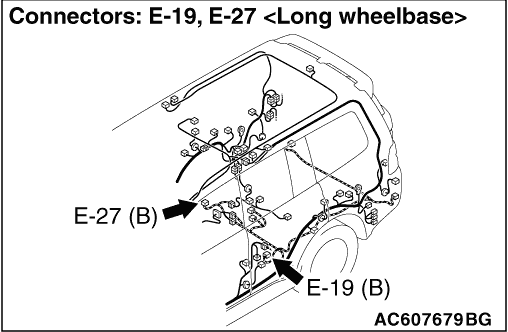
STEP 8. Check D-232 ASTC-ECU connector, D-219, D-231 intermediate
connector and E-27 wheel speed sensor rear: RH connector for loose, corroded or damaged terminals, or
terminals pushed back in the connector.
|
|
|
Q.
Is the check result normal?
|
|
|
Go to Step 10.
|
|
|
|
|
|
Repair or replace the damaged component(s). Then go to Step 15.
|
|
|
|
|
|
STEP 9. Check D-232 ASTC-ECU connector, D-219, D-231 intermediate
connector and E-19 wheel speed sensor rear: LH connector for loose, corroded or damaged terminals,
or terminals pushed back in the connector.
|
|
|
Q.
Is the check result normal?
|
|
|
Go to Step 10.
|
|
|
|
|
|
Repair or replace the damaged component(s). Then go to Step 15.
|
|
|
|
|
|
STEP 10. Inspect the wheel speed sensor.
|
|
|
Check the wheel speed sensor relevant to the diagnosis code. For the applicable inspection
procedure, refer to .
|
|
|
- When code No.11 is stored: Front right wheel speed sensor
- When code No.12 is stored: Front left wheel speed sensor
- When code No.13 is stored: Rear right wheel speed sensor
- When code No.14 is stored: Rear left wheel speed sensor
|
|
|
Q.
Is the check result normal?
|
|
|
YES <Front right wheel speed sensor> : Go to Step 11.
|
|
|
|
|
|
YES <Front left wheel speed sensor> : Go to Step 12.
|
|
|
|
|
|
YES <Rear right wheel speed sensor> : Go to Step 13.
|
|
|
|
|
|
YES <Rear left wheel speed sensor> : Go to Step 14.
|
|
|
|
|
|
Replace the wheel speed sensor. Then go to Step 15.
|
|
|
|
|
|
STEP 11. Check the harness wires between D-233 ASTC-ECU connector
terminal 27, 28 and A-36 wheel speed sensor front: RH connector terminal 1, 2.
|
|
|
Check for open circuit or short to earth.
|
|
|
Q.
Is the check result normal?
|
|
|
Go to Step 15.
|
|
|
|
|
|
Repair the wiring harness. Then go to Step 16.
|
|
|
|
|
|
STEP 12. Check the harness wires between D-233 ASTC-ECU connector
terminal 30, 31 and A-28 wheel speed sensor front: LH connector terminal 1, 2.
|
|
|
Q.
Is the check result normal?
|
|
|
Go to Step 15.
|
|
|
|
|
|
Repair the wiring harness. Then go to Step 16.
|
|
|
|
|
|
STEP 13. Check the harness wires between D-232 ASTC-ECU connector
terminal 60, 61 and E-27 wheel speed sensor rear: RH connector terminal 2, 1.
|
|
|
Q.
Is the check result normal?
|
|
|
Go to Step 15.
|
|
|
|
|
|
Repair the wiring harness. Then go to Step 16.
|
|
|
|
|
|
STEP 14. Check the harness wires between D-232 ASTC-ECU connector
terminal 46, 47 and E-19 wheel speed sensor rear: LH connector terminal 2, 1.
|
|
|
Q.
Is the check result normal?
|
|
|
Go to Step 15.
|
|
|
|
|
|
Repair the wiring harness. Then go to Step 16.
|
|
|
|
|
|
STEP 15. Check whether the diagnosis code is stored again.
|
|
|
Check again if the diagnosis code is stored.
|
|
|
(1)Turn the ignition switch to the "ON" position.
|
|
|
(2)Erase the diagnosis code.
|
|
|
(3)Turn the ignition switch to the "LOCK" (OFF) position.
|
|
|
(4)Turn the ignition switch to the "ON" position.
|
|
|
(5)Check if the diagnosis code is stored again.
|
|
|
(6)Turn the ignition switch to the "LOCK" (OFF) position.
|
|
|
Q.
Is code No.11, 12, 13 or 14 stored?
|
|
|
Replace the ASTC-ECU. Then go to Step 16.
|
|
|
|
|
|
It can be assumed that this malfunction is intermittent. Refer to GROUP 00, How
to Use Troubleshooting/Inspection Service Points -
How to Cope with Intermittent
Malfunction .
|
|
|
|
|
|
STEP 16. Check whether the diagnosis code is stored again.
|
|
|
(1)Turn the ignition switch to the "ON" position.
|
|
|
(2)Erase the diagnosis code.
|
|
|
(3)Turn the ignition switch to the "LOCK" (OFF) position.
|
|
|
(4)Turn the ignition switch to the "ON" position.
|
|
|
(5)Check if the diagnosis code is stored.
|
|
|
(6)Turn the ignition switch to the "LOCK" (OFF) position.
|
|
|
Q.
Is code No.11, 12, 13 or 14 stored?
|
|
|
Repeat the troubleshooting from Step 1.
|
|
|
|
|
|
The procedure is complete.
|
|
|
|