Inspection Procedure 8: There is noise when starting the engine.
DIAGNOSIS PROCEDURE
| caution |
|
| Noise types ( ) indicates the sound type. |
Situation |
Cause |
Countermeasure |
| Ignition noise: (Crack, tapping, rattle, plash) |
|
|
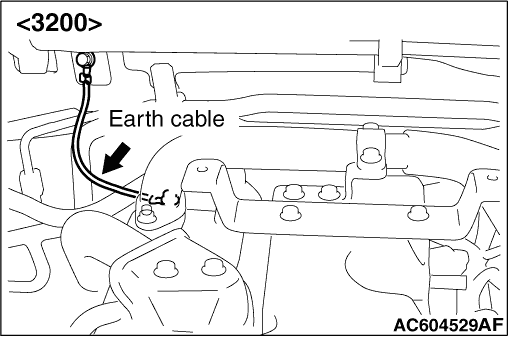
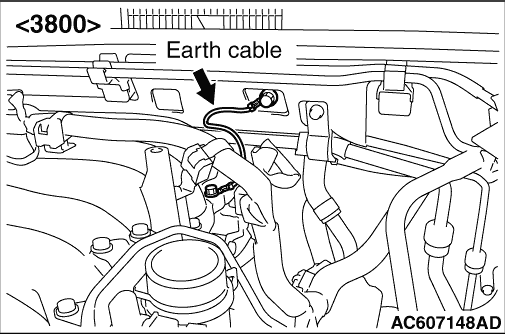
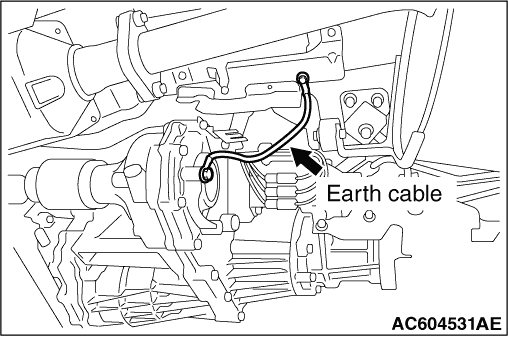
Check the earth cable, and replace if necessary. (Refer to the figure
below.) |
| Wiper motor noise: (hum, distorted hum) |
Synchronised with the wiper movement, and also becomes faster when wiper
movement is sped up. When the wiper is stopped, the noise also stops. |
Noise generated by the wiper motor operation |
Check the wiper motor (Refer to GROUP 51 -
Windshield Wiper, Inspection  .),
and replace if necessary. .),
and replace if necessary. |
| Static electricity (cracking, popping) |
|
The parts or wiring move for some reason, and cause the noise by
contacting against the body metal parts. |
Return the parts and wiring to the normal positions. |
| Various types of noise are generated in various parts of the body. |
Caused by the looseness between the body and the hood, trunk lid,
bumper, exhaust pipe and muffler, suspension, or others. |
Securely tighten the mounting bolts of each part. |
|
| Noise from other electrical equipment |
- |
The noise may be generated when the electrical equipment become old. |
Repair or replace the electrical equipment. |